
Capped Bust Half Dollars
Grading Capped Bust Half Dollars: Wear, Weak Strike, and Original Surfaces
How to separate circulation wear from strike characteristics while evaluating originality and eye appeal.
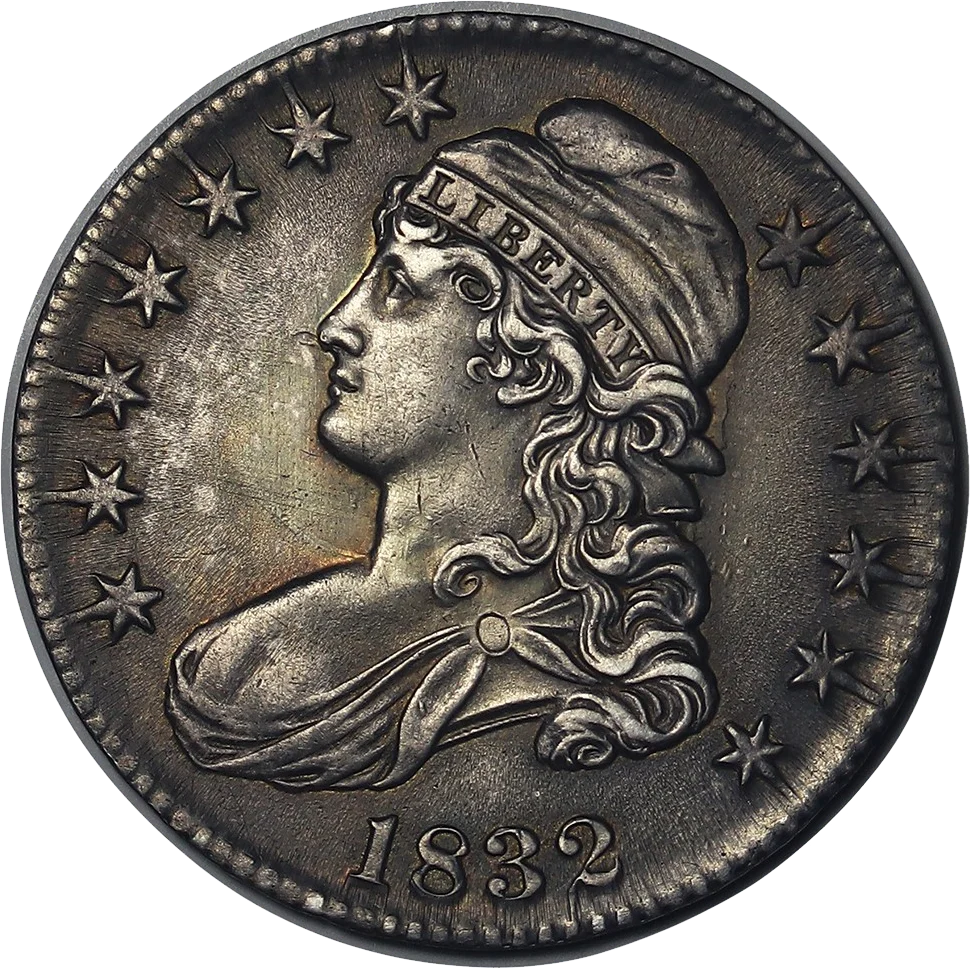
A Capped Bust half dollar can look deceptively simple to grade. At first glance, the process seems to be about how much detail remains on Liberty, the eagle, and the lettering. In practice, these early silver coins demand a more careful approach.
Many examples were struck with uneven pressure, prepared from imperfect planchets, or altered by later cleaning. A weakly struck coin may retain original mint luster. A well struck coin may have honest circulation wear. An old adjustment mark can be part of the coin’s manufacture, while a fresh scratch is later damage. Learning to separate these conditions is one of the most useful skills a collector can develop.
The goal is not to force every coin into a precise numerical grade from a quick glance. The goal is to recognize what the coin is honestly showing you, then decide whether its surfaces, strike, and eye appeal support its grade.
Begin With the Right Grading Mindset
Capped Bust half dollars were produced for active circulation. Most surviving pieces were handled, spent, stored, cleaned, dipped, or exposed to changing environments over many decades. Even attractive examples often show minor evidence of their long history.
When grading one, consider three separate questions.
- How much actual circulation wear is present
- How complete was the original strike
- How original and appealing are the surfaces today
These questions overlap, but they should not be confused. A softly struck eagle breast is not automatically wear. Flat hair curls are not always evidence that the coin circulated heavily. Conversely, a coin can have a strong strike and still show clear rubbing across Liberty’s highest points.
A useful habit is to inspect the same area twice. First ask whether the detail is present. Then ask whether the metal texture looks disturbed by friction. That second question often provides the better answer.
Locate the High Points Before Assigning a Grade
Wear appears first on the highest design elements. On Capped Bust half dollars, those areas can vary slightly by die marriage and striking quality, but several locations deserve close attention.
On the obverse, inspect Liberty’s cap, the hair above the forehead, the curls around the face and ear, the drapery folds across the bust, and the uppermost portions of the bust itself. These areas often reveal the earliest circulation friction.
On the reverse, inspect the eagle’s head, neck, breast, wing tops, claw details, and the highest leaves and berries in the olive branch. The shield lines and feather definition can also help, although a weak strike may leave them incomplete even when the coin has little wear.
True wear usually has a recognizable texture. It tends to smooth the metal, flatten fine detail, and remove luster from the affected area. On an uncirculated coin, the high points should generally retain a similar mint made texture to the surrounding fields, even if the design was never fully brought up by the dies.
A lightly circulated coin may show slight friction on Liberty’s hair and the eagle’s breast while preserving strong overall detail. In this range, a small amount of wear can make a major difference in grade, especially if it has interrupted luster across the high points.
Detail alone does not establish grade. The condition of the metal on the highest points is usually more important than how sharp those details appear.
Separate Weak Strike From Circulation Wear
Weak strike is one of the central grading challenges in this series. Early United States Mint production was not always uniform, and individual dies could show uneven pressure, wear, misalignment, or localized weakness.
A weak strike often affects a broad area in a way that looks consistent with the coin’s manufacturing process. For example, the eagle’s breast may be soft while the surrounding fields remain lustrous and undisturbed. Liberty’s hair may lack separation in one region, yet nearby high points can still show original texture.
Wear behaves differently. It is caused by contact during circulation and is most evident on exposed areas. It normally creates smoother, more reflective, or duller patches than the surrounding metal. On a circulated coin, the loss of detail is paired with a change in surface texture.
Use these comparison points when evaluating a potentially weak strike.
- Compare the suspect area with nearby protected recesses
- Look for matching luster in the fields and on the high points
- Check whether weakness appears on both sides in expected locations
- Study whether the flatness follows the design or appears as random abrasion
- Be cautious when one area is unusually sharp but another is unusually flat
A coin can have both a weak strike and circulation wear. This is especially important with midgrade pieces. An originally soft eagle breast may later acquire light friction, making the detail look flatter than either factor alone would suggest.
Recognize Adjustment Marks and Planchet Issues
Before striking, some early silver planchets were adjusted to meet weight standards. Mint workers removed small amounts of metal with filing tools, leaving thin parallel marks. These adjustment marks can appear on either side of a Capped Bust half dollar.
Original adjustment marks are part of the coin’s production history. They are not automatically evidence of damage, and they should not be treated the same as modern scratches. Their appearance is often different from later marks. They may run in a relatively consistent direction, can pass beneath portions of the design, and may show evidence of having been struck over.
Still, not every linear mark is an adjustment mark. A later scratch may be sharper, brighter, irregularly placed, or clearly cut into metal after the coin left the Mint. If you are uncertain, avoid assuming a mark is harmless simply because the coin is old.
Planchet flaws can also affect the appearance of an early half dollar. These may include laminations, small voids, roughness, striations, or areas of uneven metal. Some are natural to the planchet and may be acceptable depending on severity. Others can significantly reduce eye appeal or create concerns about damage.
When inspecting marks and planchet issues, ask whether the feature appears integral to the metal or whether it looks like a later injury. Magnification can help, but too much magnification can make ordinary features appear more severe than they do in hand.
Read Luster and Surface Originality
Luster is not merely shine. On a Mint State coin, it is the light reflecting from the microscopic flow lines created during striking. It often moves across the surface as the coin is tilted under a single light source. Collectors commonly describe this as cartwheel luster.
Capped Bust half dollars can show frosty, satiny, semi prooflike, or subdued luster. The character varies from coin to coin, and old cabinet toning can soften the visual effect. A coin does not need to be bright white to have original surfaces.
Originality often shows through in the relationship between the fields, devices, and toning. Natural aging may produce silver gray, pearl, gold, russet, blue, or multicolored toning. None of these colors alone proves that a coin is original. What matters is whether the color appears stable, gradual, and consistent with the surface beneath it.
Potential cleaning indicators include the following.
- Hairlines in the fields, especially when they run in repeated directions
- Unnaturally bright or chalky areas around the devices
- A flat, lifeless look where luster should be present
- Dark residue in protected areas paired with bright open fields
- Uneven color that appears to sit on top of the metal
- Polished looking high points with dull surrounding fields
Cleaning ranges from old and light to harsh and obvious. An old cleaning may leave a coin technically problem free in some market settings, but it can still reduce collector appeal and value. A harshly cleaned coin can have reduced eye appeal even when its remaining details are strong.
Do not confuse every toned coin with an original coin or every white coin with a cleaned coin. Surface evaluation requires experience, comparison, and often in hand examination.
Check the Rim, Edge, and Signs of Mishandling
The rims of Capped Bust half dollars deserve close study. Examine both sides under angled light for bumps, flattening, filing, bends, cracks, and evidence of mounting. A rim issue can affect the coin’s grade, its eligibility for a straight grade, and its market appeal.
Pay special attention to areas where the rim meets the dentils. Blending can result from a weak strike, but it can also result from wear or damage. Look for symmetry. Mint made weakness usually fits the rest of the coin’s production quality, while damage often appears localized and disruptive.
The edge should also be considered. Lettered edge half dollars may show wear, dents, or filing that is not obvious in standard photographs. Edge inspection is one reason an in hand review is so valuable.
Use Photographs Carefully
Photographs are helpful for comparing designs, identifying obvious damage, and screening coins before purchase. They are limited tools for final grading.
Lighting can hide hairlines, exaggerate luster, conceal rim disturbances, or make toning appear more vivid than it is. A single image cannot show how luster rolls across the surface. It may also obscure adjustment marks, faint friction, or subtle signs of cleaning.
When reviewing photographs, seek clear images of both sides, close views of the rims, and multiple lighting angles when available. Be skeptical of images that are heavily edited, overly dark, intensely bright, or too small to evaluate surface texture.
For an important purchase, a coin with uncertain authenticity, or a piece that may be valuable, seek evaluation from a qualified professional authenticator or an established third party grading service. Authentication and grade opinion are especially worthwhile when a coin shows unusual surfaces, an unfamiliar edge, questionable marks, or an unexpectedly strong apparent grade.
A Practical Grading Checklist
Before forming a grade opinion, work through this short checklist.
- Identify the highest points on Liberty and the eagle
- Decide whether flatness reflects wear, strike weakness, or both
- Check for remaining luster on the high points
- Inspect for adjustment marks and distinguish them from later scratches
- Evaluate planchet flaws separately from post Mint damage
- Look for cleaning hairlines, altered color, and disrupted luster
- Inspect both rims and the edge for damage or repair
- Judge eye appeal only after considering strike and surface originality
- Review photographs as preliminary evidence rather than final proof
Collectors seeking more series background can explore the Capped Bust Half Dollar series.
A Careful Surface Review Before You Buy
Professional grading standards distinguish the amount of circulation wear from strike, luster, surface preservation, and eye appeal. For circulated coins, wear is the primary grading factor. For Mint State coins, the absence of circulation wear does not mean that every detail must be fully struck. PCGS grading guidance and the American Numismatic Association grading standards both emphasize that these factors must be considered separately. Accessed August 13, 2026.
Start with the highest parts of Liberty and the eagle, then study the texture of the metal rather than detail alone. Friction on a high point can interrupt original luster and leave a smoother appearance. By contrast, a softly impressed area may retain an undisturbed Mint made texture despite incomplete design detail. PCGS specifically identifies strike and luster as separate grading considerations for Mint State coins. PCGS grading guidance
Adjustment marks deserve special care. PCGS defines them as file marks made before striking on certain early gold and silver planchets to remove excess metal. They are Mint made features, not automatically later damage, though their severity and placement can still affect eye appeal. PCGS glossary entry for adjustment marks A sharp isolated line that cuts across the finished surface without evidence of having been struck over should be treated more cautiously than a set of older parallel marks.
Planchet flaws also call for a separate judgment. Laminations, streaks, and other metal issues may originate before striking, while scratches, dents, filing, and rim bruises generally reflect later handling. Early silver specialists often assess whether a feature is integral to the struck metal and whether it disrupts the coin’s overall appearance.
Luster should be examined under a single light while the coin is gently tilted by its edge. NGC explains that an unworn coin may show frosty, satiny, or prooflike luster, and that original luster can create a rolling cartwheel effect as the coin is moved. NGC guidance on luster and cleaned coins A coin need not be brilliant white to appear original. Toning may coexist with original luster, but color alone cannot prove that a surface has never been cleaned. NGC guidance on luster and cleaned coins
Watch for repeated hairlines, bright patches around devices, dull or washed out fields, and color that appears inconsistent with the underlying metal. PCGS and NGC both recognize hairlines, cleaning, surface disturbance, luster, and eye appeal as important grading concerns. PCGS grading standards NGC details grading guide
Do not neglect the rims and edge. A localized rim bump, filing, bend, or area of flattening can materially change the coin’s appearance and may raise questions that cannot be resolved from a straight on image. The Capped Bust half dollar series spans 1807 through 1839, so edge characteristics should be checked against the correct subtype before assigning significance to an unusual feature. United States Mint half dollar history
Photographs are useful for screening a coin, but they are not a final grading method. Because luster is judged partly by how light moves across the surface, one still image cannot fully establish luster quality, subtle friction, hairlines, edge damage, or surface originality. This is an inference based on NGC’s description of viewing luster while rotating a coin under light. NGC guidance on luster and cleaned coins
For an expensive coin, an uncertified piece with unusual surfaces, a suspected alteration, or any example whose grade would substantially affect the purchase decision, seek in hand review and professional authentication. A qualified early United States silver specialist can be especially valuable when adjustment marks, planchet defects, rim issues, or possible cleaning make the diagnosis uncertain.
Research sources
- PCGS grading guidance
- American Numismatic Association grading standards
- PCGS grading guidance
- PCGS glossary entry for adjustment marks
- NGC guidance on luster and cleaned coins
- PCGS grading standards
- NGC details grading guide
- United States Mint half dollar history
Grading Capped Bust half dollars is an exercise in observation rather than speed. The best evaluations separate the coin’s original manufacture from the effects of circulation and later handling. A weak strike is not wear. Adjustment marks are not necessarily damage. Toning is not automatic proof of originality. And a sharp photograph is not the same as an in hand inspection.
With practice, careful comparison, and professional help when warranted, collectors can make more confident decisions and better appreciate the individual character of these historic half dollars.
Frequently Asked Questions
How can I tell whether a Capped Bust half dollar has wear or a weak strike?
Look at texture as well as detail. Wear usually smooths the high points and removes luster through friction. A weak strike may leave flat detail, but the affected area can still show undisturbed mint made texture and luster.
Are adjustment marks considered damage?
Original adjustment marks were made before striking to adjust planchet weight. They are part of the coin’s production and differ from later scratches. Their effect on desirability depends on their severity, location, and the overall appearance of the coin.
Does dark toning mean a Capped Bust half dollar is original?
Not necessarily. Natural toning can be attractive and may support an original appearance, but color alone cannot establish originality. Examine luster, texture, protected areas, and possible cleaning evidence together.
Can a cleaned Capped Bust half dollar still be collectible?
Yes. Many collectors own cleaned early silver coins because truly original examples can be difficult to find and may be more expensive. The important considerations are the severity of the cleaning, the coin’s remaining eye appeal, its rarity, and whether the price reflects the condition.
Should I buy an uncertified Capped Bust half dollar from photographs alone?
Photographs can be useful for preliminary review, but they cannot reliably reveal every grading or authenticity concern. For a significant purchase, consider an in hand inspection, a trusted specialist’s opinion, or professional authentication and grading.