
Capped Bust Half Dollars
How to Read the Edge Lettering on a Capped Bust Half Dollar
What edge lettering can tell collectors and what normal variations should not be mistaken for errors.
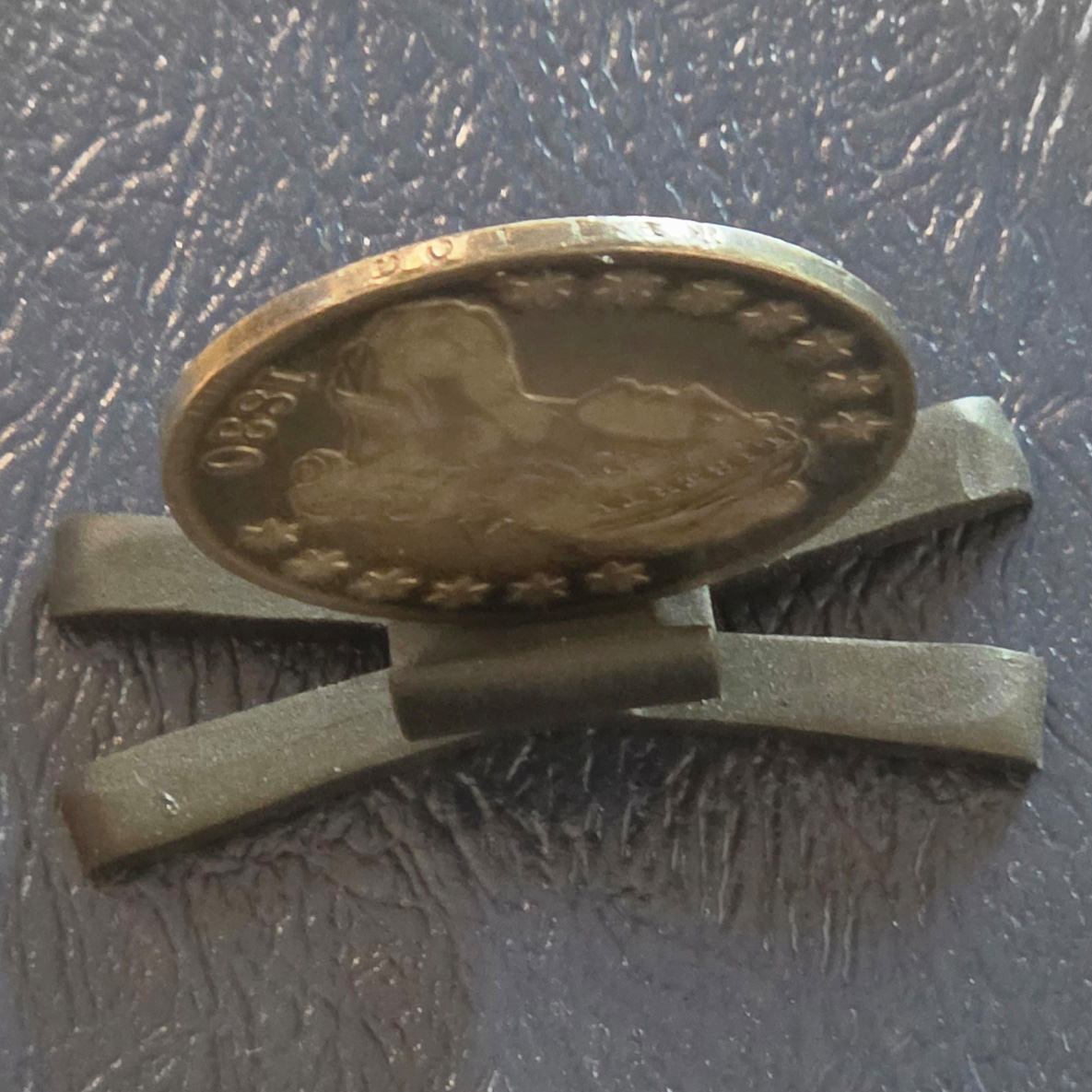
Edge lettering is one of the most easily overlooked features on a Capped Bust half dollar and one of the most informative. Collectors naturally focus on the obverse portrait, reverse eagle, date, mint-related details, and overall surface quality. Yet the narrow band around the coin can help explain how the piece was made, whether an apparent oddity is normal, and when a closer look is justified.
On lettered-edge Capped Bust half dollars, the edge carries the denomination statement FIFTY CENTS OR HALF A DOLLAR. Because this inscription was applied during the striking process rather than engraved by hand afterward, its appearance can vary from coin to coin. Slightly uneven spacing, incomplete-looking letters near the ends of the inscription, and a visible overlap are often normal production characteristics not automatically mint errors.
The key is to examine the edge carefully, compare what you see with the way an edge device works, and avoid “testing” the coin in ways that can create damage.
A coin's edge is part of its original design and manufacture. Treat it with the same care you would give the obverse and reverse.
First, identify whether your half dollar should have edge lettering.
Before evaluating an unusual edge, make sure the coin is from a lettered-edge Capped Bust half dollar type. The Capped Bust half dollar series includes both lettered-edge and reeded-edge issues, so not every coin in the broad series should display an inscription.
A lettered edge should show raised lettering around the circumference. A reeded edge, by contrast, has closely spaced vertical grooves and no denomination inscription. This distinction matters: a reeded-edge coin is not an error simply because it lacks the words found on earlier lettered-edge examples.
If you are uncertain about the coin’s date, type, or edge style, begin with a reliable reference for Capped Bust half dollars or seek help from a specialist.
What you should see on a normal lettered edge?
On a genuine, properly struck lettered-edge example, look for:
- Raised letters rather than incuse letters.
- A denomination phrase running around the edge.
- Letter forms that generally match the period style of the coin.
- A point where the beginning and end of the lettering meet or overlap.
- Lettering that may be stronger in some areas than others.
- Edge surfaces that show circulation wear in a manner consistent with the coin’s obverse and reverse.
The lettering should look integrated with the coin, not pasted on, engraved later, or sharply different in texture from the surrounding metal.
Why Capped Bust half dollars have lettered edges?
Edge devices historically served more than a decorative purpose. On silver coins, an edge inscription or reeding made it more difficult to remove small amounts of precious metal from the rim without leaving evidence. This practice addressed the old problem of clipping: shaving metal from a coin’s edge while attempting to leave the coin outwardly spendable.
For modern collectors, the edge is also a diagnostic surface. It can reveal:
- Whether the coin has been heavily worn or altered.
- Whether rim damage extends onto the edge.
- Whether the lettered edge is appropriate for the type.
- Whether an apparent anomaly is a normal consequence of production.
- Whether the coin deserves expert authentication or variety attribution.
Edge lettering is not, by itself, proof of authenticity. Counterfeiters know collectors inspect edges, and altered coins can sometimes be made to appear more convincing from a distance. Consider the edge as one part of a complete examination that includes weight, diameter, metal appearance, die characteristics, surfaces, and provenance where available.
How edge lettering was applied and why it is rarely perfectly "centered"?
A lettered edge was created before the coin received its obverse and reverse designs during striking. The blank passed through an edge-marking process that imparted the inscription around its circumference. Later, the prepared planchet was struck between dies.
That sequence helps explain a point that surprises new collectors: edge lettering does not have a fixed, meaningful alignment with the portrait, date, eagle, or reverse legend. If you rotate the coin and find that the word FIFTY is opposite the date on one piece but opposite a different feature on another, that alone is not evidence of an error.
The edge inscription functions as a continuous circular design. It has to start somewhere, and its beginning and ending point must meet. As a result, the layout can produce ordinary variations in spacing and overlap.
Normal overlap at the junction
At the point where the edge lettering begins and ends, letters may overlap, crowd together, touch, or appear unusually close. This is often called the edge-lettering overlap or junction. It can be visually dramatic, particularly when two letters seem partially superimposed.
A normal overlap is usually characterized by:
- Lettering that remains raised and consistent with the rest of the inscription.
- No obvious cut, seam, solder line, or added metal.
- A localized crowded area rather than random distortion around the entire edge.
- Metal texture and toning that match nearby edge surfaces.
- No evidence that the coin has been split apart and rejoined.
Do not assume that a crowded letter, doubled-looking area, or imperfect join is a rare error. The overlap is an expected consequence of fitting a phrase around a circular edge. The amount and appearance can vary because planchet dimensions, edge-device setup, metal flow, wear, and later handling all affect what survives visibly.
Normal spacing differences
Spacing on the edge may not look mechanically identical from one word to the next. On circulated pieces, wear can make some letters look farther apart simply because the ends of adjacent letters have softened. Small differences can also result from the original edge-marking process.
Common, usually non-alarming observations include:
- A slightly wider gap between certain letters.
- A compressed-looking word near the overlap.
- One or two letters that appear weaker than neighboring letters.
- A partial letter near an area of rim wear.
- Uneven visibility caused by toning, dirt, or old residue.
- Lettering that appears shallow because the edge has been worn smooth through circulation.
What matters is the overall pattern. A single crowded area at the junction is far less concerning than a long stretch of missing lettering, an unnatural seam, or lettering that appears inconsistent with the coin’s physical construction.
What is a safe, visual way to inspect the edge?
The best edge examination uses steady support, indirect handling, and enough light to reveal relief without glare. You do not need to rub the edge, scrape debris from the letters, or use chemicals to make the inscription "read better."
Safe handling checklist
Before examining the coin, use this checklist:
- Hold the coin by its edges only, ideally over a soft towel, pad, or tray.
- Work over a stable surface so a dropped coin is less likely to be damaged.
- Use clean, dry hands; cotton or nitrile gloves can reduce fingerprints but may make a coin easier to drop.
- Never slide the edge across a hard tabletop.
- Do not attempt to remove dirt from between letters with a pin, toothpick, knife, or brush.
- Do not polish, dip, rub, burnish, or chemically clean the edge.
- Do not bend the coin, squeeze it in a tool, or perform a "ring test."
- Return the coin to an inert holder after inspection.
A simple folded archival flip or a rigid holder can make edge viewing easier. If the coin is already in a safe holder with a clear edge view, leave it protected rather than removing it unnecessarily.
Lighting that makes lettering easier to read
Direct overhead light often produces harsh glare on silver. A better approach is low-angle light: position a small LED lamp or flashlight so light travels across the edge rather than straight into it. The shadows created by the raised letters can make the inscription much easier to distinguish.
Try these methods:
- Single low-angle light: Hold the coin upright or support it in a non-abrasive stand, then shine light from one side.
- Rotate the coin slowly: Turn the coin a few degrees at a time instead of moving the light constantly.
- Use diffuse ambient light first: Window light or a shaded lamp can reveal general texture before you switch to a focused beam.
- Photograph in sections: Take several overlapping edge photographs rather than trying to capture the entire circumference in one image.
- Avoid flash glare: A phone flash close to the coin often washes out the raised lettering.
A neutral background—gray, black, or white—can help your camera focus. Avoid resting the coin directly on a rough surface just for a photograph.
Magnification: useful, but not always better
For an initial inspection, the naked eye and good lighting are often enough. A 5× to 10× loupe is generally useful for studying letter shapes, surface breaks, tiny tool marks, and the overlap area. Higher magnification can be helpful for documentation, but it can also make normal texture look alarming.
Use magnification to answer specific questions:
- Are the letters raised from the original edge surface?
- Does the overlap area show continuous metal flow?
- Is there a crack, groove, seam, or suspiciously different texture?
- Is a "missing" letter actually present but worn or obscured by toning?
- Does the edge damage continue onto the obverse or reverse rim?
Do not diagnose a rare error solely from a highly magnified image. Magnification enlarges both meaningful evidence and ordinary imperfections.
Distinguishing wear, damage, and potentially significant anomalies
Most unusual-looking lettered edges are explained by wear, handling, or normal production variation. Still, some conditions deserve closer review.
Often normal or explainable
These features are commonly encountered and should be evaluated cautiously:
- Tight lettering at the overlap point.
- Slight differences in spacing.
- Letters weakened by circulation wear.
- Edge flattening from ordinary contact with other coins.
- Dark toning in recessed areas that makes letters seem incomplete.
- Minor rim bumps that affect a small adjacent portion of the edge.
- Uneven strike-related appearance that is consistent with the rest of the coin.
Reasons to seek expert review
Consider showing the coin to a knowledgeable Capped Bust specialist, established dealer, or reputable third-party authentication service if you observe one or more of the following:
- A long section of absent, distorted, or plainly incompatible edge lettering.
- A seam that suggests the coin may have been altered, assembled, or repaired.
- Tool marks, filed areas, fresh-looking metal, or unnatural smoothing around the edge.
- Lettering that appears incuse when it should be raised.
- A mismatch between the edge style and the coin’s attributed type or date.
- A coin that is unusually heavy, light, thick, thin, or otherwise physically inconsistent with published specifications.
- Edge features that seem dramatically different from documented examples of the same variety.
- A potentially valuable variety or error attribution that would materially affect the coin’s market treatment.
Professional review is especially sensible before paying a premium, submitting a coin for sale, or describing an edge feature as an error. An expert may use comparison pieces, weight and measurement tools, die-variety references, and authentication experience that are difficult to duplicate at home.
Keep observations separate from value claims
An unusual edge can be interesting without adding value. A collector may describe a coin as having a pronounced overlap, uneven spacing, weak edge lettering, or edge damage. Those are observations. Whether the feature is a recognized mint error, a variety, post-mint damage, or merely a normal production characteristic is a separate question.
Likewise, a retail asking price is not the same as an auction result, an estimated value, melt value, or face value. A Capped Bust half dollar has a face value of fifty cents, but its collector market value depends on authenticity, date, variety, grade, surfaces, eye appeal, rarity, and current demand. Silver content may contribute a melt-value component, but melt value does not establish the collectible value of a numismatic coin.
When documenting an edge, write down exactly what you see before assigning a label. A useful note might read: “Raised edge lettering present; overlap between final and initial letters; no visible seam; moderate wear across one word.” That description is more reliable than prematurely calling the coin a "major error.”
What is a practical edge lettering examination routine to follow?
Use this short routine whenever you inspect a lettered-edge Capped Bust half dollar:
- Confirm that the coin type should have a lettered edge.
- Examine the entire circumference in good low-angle light.
- Locate the overlap or junction area.
- Note weak, crowded, missing-looking, or damaged letters.
- Compare edge wear with wear on the obverse and reverse.
- Look for seams, filing, repair, or inconsistent metal texture.
- Use 5× to 10× magnification for close questions.
- Photograph suspicious areas without removing patina or residue.
- Compare with reputable references or verified examples.
- Seek qualified review before paying or claiming a premium for an anomaly.
Conclusion
The edge lettering on a Capped Bust half dollar is a compact record of design, manufacturing, circulation, and survival. A visible overlap, uneven spacing, or weak letter is often part of that story rather than proof of an error. Examine the whole edge under good light, handle the coin conservatively, and document what you see without trying to alter it. When the edge appears incompatible with the type, physically suspicious, or potentially important, qualified expert review is the safest next step.