
Seated Liberty Half Dollars
Original Surfaces or Cleaning? Examining Seated Liberty Half Dollars
A non-destructive guide to recognizing natural surfaces and common signs of past cleaning.
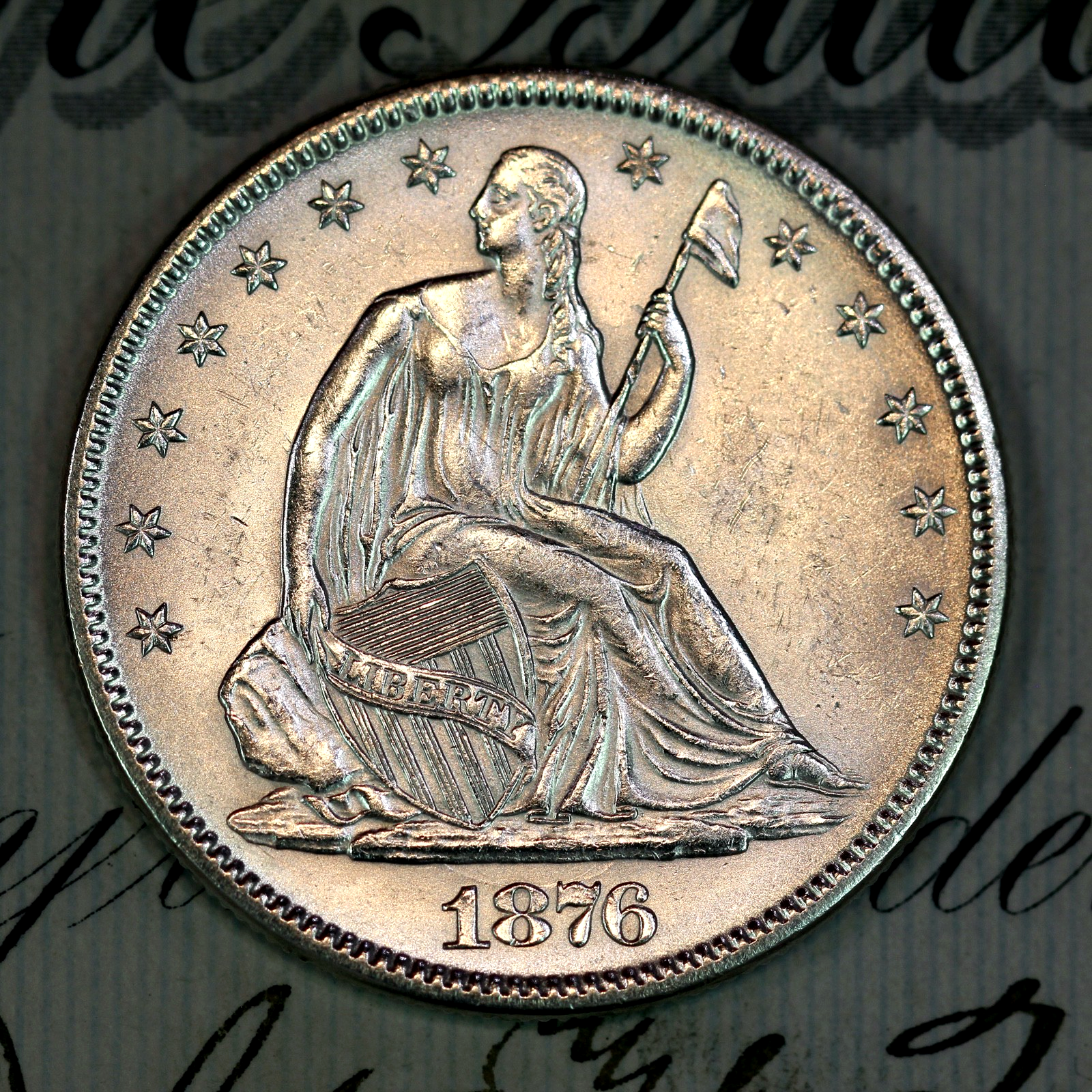
A Seated Liberty half dollar can look impressive at first glance and still raise important questions under closer examination. Brightness, color, and shine are not the same thing as originality. A coin may have attractive old toning yet have been cleaned years ago. Another may look somewhat dull or uneven but retain honest, untouched surfaces that experienced collectors value.
Learning to separate natural surfaces from altered ones is one of the most useful skills a Seated Liberty half dollar collector can develop. It helps with buying decisions, grading expectations, and the long term enjoyment of a collection. The goal is not to reject every coin that has ever been handled or stored imperfectly. It is to understand what the surface is telling you.
What “Original Surfaces” Really Means
When collectors describe a coin as original, they generally mean that its surfaces have not been materially altered by abrasive cleaning, polishing, harsh chemical treatment, artificial toning, or other attempts to improve its appearance.
Original does not necessarily mean perfect.
A Seated Liberty half dollar may have circulated extensively. It can show wear on Liberty’s gown, shield, knee, and head, along with small marks from decades of use. It may have natural gray toning, mottled colors near the rims, dark areas in the lettering, or a slightly uneven appearance. These features can be normal outcomes of circulation, storage, and age.
Originality is better understood as a question of surface integrity than beauty. A coin can be naturally toned and unattractive. It can also be cleaned and visually appealing. The collector’s task is to look beyond the first impression.
Old toning is evidence of age and storage history, not automatic proof that a coin has never been cleaned.
For more context on dates, varieties, and mint issues in this series, see [INTERNAL LINK NEEDED].
Start With the Right Examination Setup
Lighting can dramatically change how a Seated Liberty half dollar appears. A coin that looks smooth and problem free in a flat online image may reveal hairlines, residue, or altered color when tilted under a single light source.
Use a careful, non destructive routine:
- Hold the coin only by its edge over a soft surface.
- Use a single incandescent or neutral LED light placed above and slightly to one side.
- Tilt and rotate the coin slowly rather than moving it quickly.
- Examine both obverse and reverse.
- Use a loupe with moderate magnification, often around five to ten power.
- Look first with the naked eye, then use magnification to confirm what you see.
- Compare the coin with known problem free examples when possible.
A loupe can reveal useful detail, but excessive magnification can make minor marks look more serious than they are. Most buying decisions should begin with overall eye appeal, texture, color, and luster before moving to close inspection.
Cartwheel Luster and Why It Matters
On an uncirculated or lightly circulated Seated Liberty half dollar, original mint luster often appears as a rotating pattern of reflected light. When the coin is tilted under a single light source, the brightness seems to move around the surface in bands or spokes. Collectors commonly call this cartwheel luster.
This effect comes from microscopic flow lines created when metal moved into the dies during striking. It is not simply a shiny surface. A polished or cleaned coin may be bright, but its brightness often looks flat, patchy, or reflective in a different way.
On a coin with surviving mint luster, look for these characteristics:
- Light appears to roll across the fields as the coin is rotated.
- The luster has depth rather than a mirrorlike glare.
- The effect is generally continuous across protected areas.
- Toning, if present, may sit over the luster rather than replacing it.
- The coin does not appear uniformly scrubbed or slick.
Circulated coins are more difficult. Wear naturally removes luster from the highest points first, leaving traces in protected fields and around lettering. A lightly circulated half dollar may retain small areas of luster near stars, date digits, legends, and design recesses. Those remnants can be helpful clues.
Still, weak luster does not automatically mean cleaning. Some Seated Liberty half dollars were softly struck, poorly stored, or exposed to environments that muted their original appearance.
Natural Circulation Texture Versus Cleaned Texture
A naturally circulated silver coin often has a soft, settled appearance. The high points become smooth from use, while the protected areas retain more texture. Dirt, oxidation, and toning may gather lightly around devices and lettering. This is often called circulation texture, and it can be appealing when it is even and undisturbed.
A cleaned coin may look different in several ways. Its fields may appear too smooth, too bright, or oddly uniform. The design can seem disconnected from the surrounding field because the cleaning altered the open areas more aggressively than protected recesses.
Common Signs of Past Cleaning
No single sign proves a coin was cleaned. Several signs seen together are more meaningful.
- Fine parallel hairlines in the fields, especially around Liberty and in open reverse areas.
- Brightness that looks white, chalky, or washed out rather than lustrous.
- A slick, polished look with little texture.
- Dark residue left around letters, stars, and design details after the open fields were brightened.
- Uneven color where accessible areas are lighter than protected recesses.
- A dull, lifeless surface after an old chemical treatment.
- An unnatural contrast between bright fields and dark recesses.
- Altered texture that resembles tiny scratches, wiping, or abrasion.
Hairlines deserve special attention. Under angled light, they may appear as fine, repeated lines crossing the fields. They are often caused by rubbing with cloth, tissue, brush bristles, or another abrasive material. They may be difficult to see in ordinary room light and nearly invisible in seller photographs.
Not every thin line is a cleaning hairline. Coins can receive random contact marks in circulation or storage. The difference is pattern. Cleaning tends to leave many similarly oriented lines in broad open areas. Random handling marks are usually less organized.
Unnatural Brightness Is Not the Same as Mint Luster
A common mistake is assuming that a bright silver coin must be uncirculated or freshly discovered. In reality, a Seated Liberty half dollar can be bright because someone removed toning or surface material.
Watch for surfaces that look excessively white compared with the coin’s wear level. A heavily circulated half dollar with smooth, worn high points and very bright fields should receive close scrutiny. Honest circulation and strong original brightness can coexist, but the combination is less common than it may first appear.
A cleaned coin can also develop a soft gray haze over time. This means an old cleaning may no longer look glaringly obvious. The coin may have retoned, sometimes naturally and sometimes through deliberate treatment. For that reason, collectors should evaluate surface texture as well as color.
Toning, Retoning, and Residue
Natural toning can range from light silver gray to deeper charcoal, gold, blue, russet, or multicolored patterns. Storage conditions, holders, paper envelopes, albums, humidity, and prior handling can all influence color. There is no single “correct” toning pattern for Seated Liberty half dollars.
Healthy natural toning often has gradual transitions and appears integrated with the underlying surface. It may be lighter on high points and stronger near rims or protected areas. It can coexist with remaining luster on uncirculated pieces.
However, toning is not a certificate of originality.
A coin may have been cleaned decades ago and then retoned during storage. Retoning can look subdued and old, particularly when the coin has spent years in an album or envelope. It can also appear uneven, spotty, or oddly placed after a dip or other chemical treatment.
Things to Question When Evaluating Color
- Does the color seem to sit naturally over the surface, or does it look painted on?
- Are there abrupt color boundaries in the fields?
- Is the coin darker in recessed areas but unusually bright on open surfaces?
- Does the toning conceal parallel hairlines?
- Are there cloudy patches or opaque films that interrupt the coin’s texture?
- Does one side look dramatically different from the other without an obvious storage explanation?
Residue can also be misleading. Green, black, white, or sticky looking material may indicate contamination from holders, adhesives, chemicals, or environmental exposure. Some residue is removable by professional conservation, but collectors should not assume that every dark spot is harmless toning.
Never attempt to improve a Seated Liberty half dollar with household cleaners, polishing cloths, jewelry dip, baking soda, toothpaste, or rubbing. Even a well intentioned cleaning can permanently reduce collector appeal and may lead to a details grade from a third party grading service.
Dipping and Its Subtle Effects
Dipping is a chemical process intended to remove tarnish from silver. A careful, limited professional dip may leave fewer obvious signs than abrasive wiping, but repeated or improper dipping can strip away surface character and weaken luster.
A dipped Seated Liberty half dollar may show:
- Bright but thin looking surfaces.
- Reduced depth in the luster.
- Color that is uniformly pale or slightly lifeless.
- A lack of natural contrast between fields and protected areas.
- Weak or broken cartwheel effect on an otherwise uncirculated coin.
Because dipping can be difficult to diagnose from a single image, avoid declaring a coin dipped solely because it is bright. Compare it with other examples of similar grade and study whether the luster appears full, natural, and undisturbed.
Environmental Damage Is Different From Ordinary Toning
Environmental damage occurs when a coin reacts with harmful materials or harsh storage conditions. It may result from moisture, chlorides, PVC contamination, soil exposure, chemical contact, or prolonged storage in unstable materials.
Potential warning signs include pitting, rough patches, powdery deposits, corrosion like texture, black encrustation, green residue, or areas where the metal looks etched. These problems can be more serious than ordinary toning because they may involve actual surface loss.
A dark coin is not necessarily environmentally damaged. Silver can tone deeply and still retain stable, original surfaces. What matters is whether the metal remains smooth and intact beneath the color.
If you suspect active residue or corrosion, isolate the coin from the rest of your collection and seek advice from a qualified professional conservator or reputable numismatic specialist. Do not experiment with removal methods.
The Limits of Photo Diagnosis
Photos are useful screening tools, but they cannot answer every surface question. Lighting, editing, white balance, compression, and reflections can hide or exaggerate hairlines, luster, and color. A seller’s image may make a cleaned coin look naturally toned, or make an original coin look brighter than it is.
When buying from photos, ask for:
- Images of both sides under angled light.
- A short rotation video when practical.
- Close images of open fields and high points.
- Clear views of any suspicious spots, residue, or color changes.
- The seller’s return policy.
- Information about whether the coin has been certified or described as having surface issues.
Certification can provide useful market confidence, but it is not a substitute for learning. Grading opinions can change over time, and collectors should still examine the coin itself whenever possible. For valuable or uncertain pieces, consider professional authentication and an in hand review before making a major purchase.
A Practical Originality Checklist
Before buying or evaluating a Seated Liberty half dollar, work through this short checklist:
- Does the coin’s brightness match its level of wear?
- Is any remaining luster active and cartwheel like?
- Are there repeated hairlines in the open fields?
- Do the surfaces look naturally textured rather than polished or slick?
- Does the toning have gradual, believable transitions?
- Is dark material merely toning, or does it look like residue or corrosion?
- Are the protected areas unusually dark compared with overly bright fields?
- Do both sides tell a consistent storage story?
- Can the coin be examined in hand or returned if surface problems become apparent?
- Is professional authentication appropriate for the coin’s value or rarity?
Conclusion
Original surfaces are not always flashy. A naturally circulated Seated Liberty half dollar may show uneven color, honest wear, and a quiet gray appearance that is far more desirable than an artificially bright coin. Learn to look for texture, luster, hairlines, residue, and consistency between wear and color.
The most reliable approach is patient comparison. Study certified examples, view coins under proper light, and treat photographs as a starting point rather than a final verdict. When a coin is expensive, rare, or uncertain, professional authentication is a sensible part of careful collecting.
Frequently Asked Questions
Does dark toning prove that a Seated Liberty half dollar is original?
No. Dark toning can occur naturally, but a coin may also tone again after it has been cleaned or dipped. Examine the texture beneath the color, look for hairlines, and compare the fields with protected areas.
Can a cleaned Seated Liberty half dollar still have value?
Yes. Its value depends on date, mint, rarity, detail, overall appearance, and the severity of the surface issue. Cleaning can reduce collector demand and may result in a details grade, but it does not make every coin worthless. Face value, silver melt value, retail asking price, and actual auction results are separate measures.
What are cleaning hairlines?
Cleaning hairlines are fine, often parallel scratches caused by wiping or rubbing a coin. They are usually easiest to see under a single angled light while the coin is slowly rotated. Random contact marks are less likely to form a repeated pattern.
Is it safe to dip an old silver half dollar?
Collectors should generally avoid dipping coins themselves. Chemical treatment can weaken luster, alter surface character, and reduce collector appeal. If conservation is genuinely needed, consult a qualified professional who understands numismatic conservation.
Can I tell from an online photo whether a coin has been cleaned?
Sometimes a photo reveals obvious brightness, hairlines, or residue, but many surface problems cannot be confirmed from images alone. Request additional photographs or a rotation video, review the return policy, and seek an in hand examination for important purchases.