Pops Change Exchange
Key Dates and Scarcer Seated Liberty Half Dollar Issues
How to research scarcity, survival, condition rarity, and demand across the long Seated Liberty series.
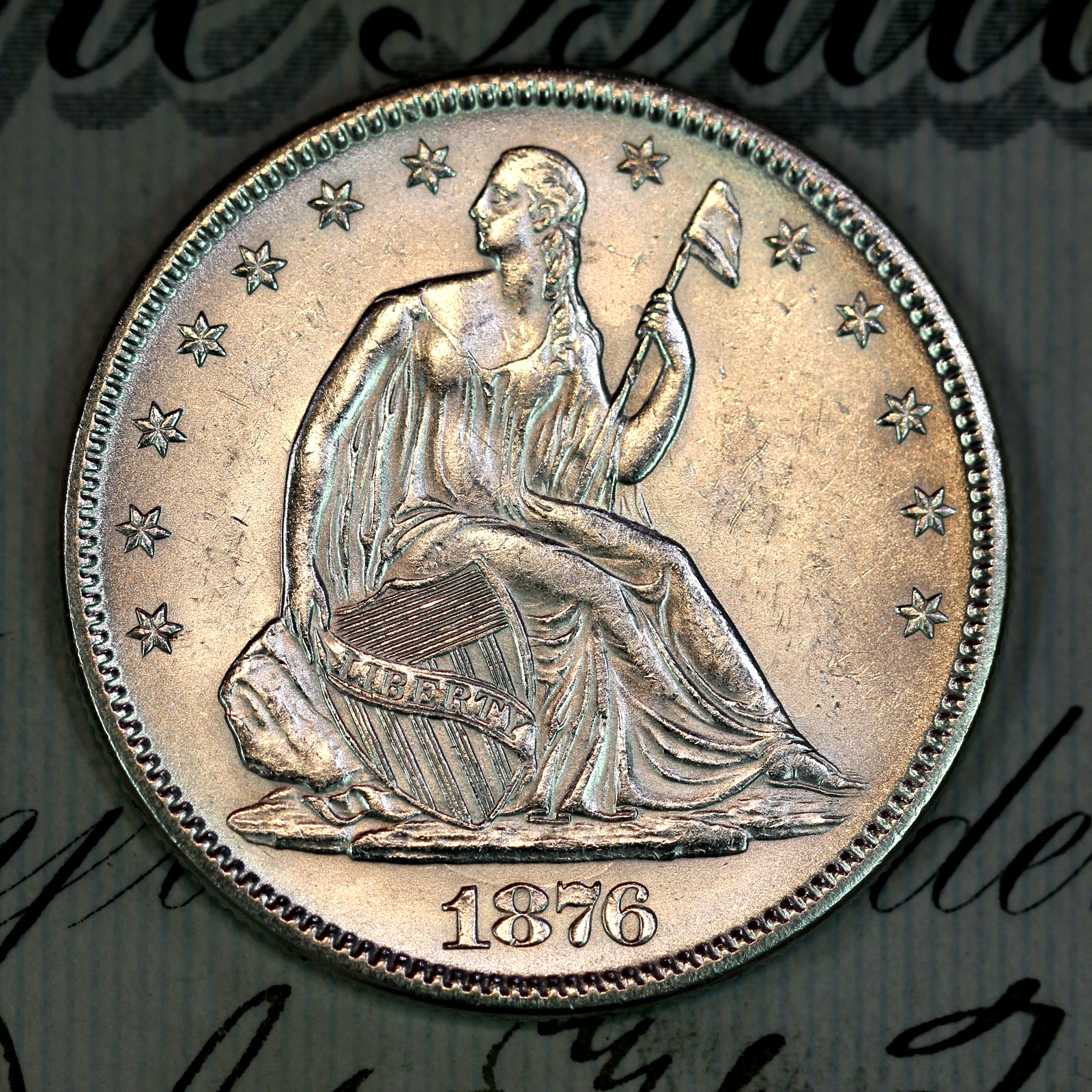
The Seated Liberty half dollar series rewards patience. At first glance, many dates can look similar: Liberty is seated, the denomination is shown beneath the shield, and the major design changes can seem minor. Yet collectors quickly learn that scarcity is not as simple as finding the lowest mintage or the oldest date.
A Seated Liberty half dollar can be important for several different reasons. One issue may have had a low original production total. Another may be difficult because few coins survived circulation, melting, export, or later collecting. A third may be available in worn grades but unusually difficult with original surfaces in Mint State. Branch-mint coins can also draw demand beyond their numerical rarity because collectors want complete date-and-mint sets.
The practical question is not merely, “Is this coin rare?” It is, “Rare in what grade, with what characteristics, and for which collectors?”
Start With the Right Meaning of “Key Date”
In everyday collecting language, a key date is a coin that creates a major obstacle in completing a series or set. A semi-key is less difficult than the leading key but still meaningfully scarcer, more expensive, or more sought after than ordinary issues.
Those labels are useful, but they are not official grades of rarity. A date can be called a key in one collecting context and only a semi-key in another.
For example, a coin may be:
- A key date for a collector assembling a complete date-and-mint run.
- A semi-key for someone collecting only Philadelphia issues.
- A condition rarity for a collector seeking Mint State pieces.
- A variety specialist’s key because of a particular die marriage, mintmark style, or design subtype.
- More available than expected in lower circulated grades, despite being difficult in attractive About Uncirculated or Mint State condition.
This is why a collector should avoid treating a one-word rarity label as the final answer. Scarcity has several layers.
Original Mintage Is a Starting Point, Not a Verdict
The original mintage is the number of coins reported struck at a mint in a particular year. It is one of the first facts collectors consult, but it does not tell the whole story.
A low mintage can indicate potential scarcity, especially when compared with other issues in the same series. Still, mintage alone cannot reveal how many coins remain, how many were saved when new, or how many survive in collectible condition.
A higher-mintage issue can be harder to locate today than a lower-mintage issue if:
- Large quantities entered circulation and wore out.
- Coins were melted during periods when silver was worth more than face value.
- Few examples were preserved by contemporary collectors.
- The issue was heavily used in commerce in a growing or remote region.
- The date is especially difficult with original, problem-free surfaces.
- Demand from collectors exceeds the supply appearing on the market.
Conversely, some lower-mintage coins were recognized early as unusual and saved in quantities disproportionate to their production. That does not make them common, but it can make them more obtainable than their mintage suggests.
When researching a date, record the mintage as a historical production figure, not as a modern population estimate.
Remember: Mintage measures coins made. Survival measures coins still known or believed to exist. Market availability measures how often collectible examples are actually offered for sale.
Survival Matters More Than Many Beginners Expect
Estimated survival is an attempt to determine how many examples of an issue remain today. It is necessarily uncertain. No one can count every coin in old collections, inherited accumulations, dealer inventories, or unreported holdings.
For Seated Liberty half dollars, survival estimates can be particularly important because the series circulated during a period when silver coins were subject to widespread use, loss, export, and melting. A date that is not especially impressive on a mintage list may become far more significant when its surviving population is considered.
When comparing estimated survival figures, ask several questions:
- Who prepared the estimate?
- Is the estimate for all grades or only collectible examples?
- Does it account for coins likely certified more than once?
- Does it separate damaged, altered, cleaned, or otherwise impaired coins from problem-free pieces?
- Is the estimate current enough to reflect newly discovered coins or revised research?
Certification population reports are useful research tools, but they are not complete survival censuses. A single coin may have been submitted multiple times over many years, sometimes at different grading services. Raw coins and coins in older holders may not be represented at all.
For that reason, population data should be read as evidence of market visibility, not as proof of the exact number surviving.
Condition Rarity Can Transform an Ordinary-Looking Date
A condition rarity is a coin that may be available in lower grades but becomes genuinely scarce or rare in high grade. This concept is central to Seated Liberty half dollars.
Many surviving coins saw real circulation. They may have worn rims, flatness on Liberty’s head and drapery, weak stars, muted luster, contact marks, cleaning hairlines, or environmental damage. Finding an example that is both sharply struck and naturally preserved can be much harder than finding the same date in Good, Fine, or Very Fine condition.
For a beginning collector, it helps to separate four different levels of availability:
| Level of availability | What it means in practice |
|---|---|
| Readily available in circulated grades | Examples appear with regularity, though quality still varies |
| Scarce in better circulated grades | Attractive Very Fine through About Uncirculated coins require patience |
| Condition scarce in Mint State | Uncirculated pieces exist, but choice examples may appear infrequently |
| Rare across most collectible grades | Even worn, problem-free examples can be difficult to locate |
An issue can move from one category to another depending on the exact grade. A collector seeking a wholesome Fine example may have a very different experience from one seeking a fully lustrous Mint State coin with strong strike quality.
Look closely at whether a coin is truly original. Natural *toning* can be desirable when it is stable and appealing, but color alone does not prove originality. Artificial color, harsh cleaning, polishing, retoning, and concealed damage can all affect value and collector demand.
Branch-Mint Issues Add a Second Layer of Demand
Seated Liberty half dollars were struck at several facilities, including Philadelphia and branch mints identified by mintmarks such as O, S, and CC. Branch-mint issues often receive heightened attention because they combine historical interest with the challenge of completing a date-and-mint collection.
A collector pursuing every mintmarked issue may compete with several other buyer groups:
- Date-and-mint set builders.
- Carson City specialists.
- New Orleans mint collectors.
- San Francisco mint collectors.
- Type collectors seeking one representative coin from a branch mint.
- Civil War era collectors.
- Variety and die-marriage specialists.
This layered demand helps explain why two coins with similar estimated survival can have different market availability and different retail asking prices.
Several branch-mint Seated Liberty half dollars are frequently researched as important issues, including the 1839-O, 1853-O No Arrows, 1866-S No Motto, and 1878-S. Their relative availability depends heavily on grade, originality, strike, and the specific variety attribution. Verify current reference listings, die-variety attributions, and census information before publishing a definitive key-date ranking.
Do not assume that every mintmark is scarce, or that every low-mintage branch-mint coin is equally difficult. Some dates are encountered more often than expected in lower grades, while others rarely appear except in compromised condition.
Learn the Design Changes Before Judging a Date
The long Seated Liberty half dollar series includes major design modifications. These changes matter because collectors often build sets by subtype as well as by date and mint.
Important visual checkpoints include:
- The early reverse style of 1839.
- The addition of drapery at Liberty’s elbow beginning in 1840.
- Arrow-and-ray changes during the mid-1850s.
- Arrows at the date in later weight-standard adjustments.
- The motto “IN GOD WE TRUST” added to the reverse beginning in 1866.
- Mintmark placement and size differences that can matter for attribution.
A coin that appears to be a common date can become much more significant if it is an important subtype or an unusual die variety. Conversely, a coin offered as a rare variety should not be accepted at face value without careful comparison to a recognized reference.
Before purchasing a claimed variety, compare:
- Date numeral shapes and spacing.
- Mintmark size, placement, and style.
- Position of arrows, stars, and letters.
- Die cracks, repunching, and other diagnostics.
- Weight and diameter.
- Edge characteristics.
- Photographs from reliable references or auction archives.
For expensive coins, seek an opinion from a qualified numismatist or consider third-party authentication. Altered mintmarks, added details, counterfeit pieces, and misattributed varieties are risks in every popular nineteenth-century silver series.
Separate Market Availability From Price
Collectors often see a coin listed online and assume that it is “available.” That conclusion can be misleading.
A coin may be listed repeatedly because the asking price is too high, the grade is disputed, the surfaces are problematic, or the seller has incorrectly attributed the variety. Meanwhile, a properly graded, original example may sell quickly and leave little public record.
Keep these terms separate:
- Face value: The legal monetary denomination, which is fifty cents for a half dollar.
- Melt value: The approximate bullion value of the coin’s silver content, which changes with silver prices. [SOURCE NEEDED]
- Retail asking price: What a dealer or seller requests, not necessarily what the coin sells for.
- Auction result: The recorded hammer price plus any buyer’s premium when applicable.
- Estimated value: An informed opinion based on comparable sales, condition, originality, and current demand.
No Seated Liberty half dollar should be evaluated solely by a price listing. A better approach is to compare multiple examples of the same date, mint, grade range, and problem status.
A Practical Research Checklist Before Buying
Use this checklist when you encounter a potentially important Seated Liberty half dollar:
- Confirm the date, mintmark, and design subtype.
- Determine whether the coin is a regular issue or a recognized variety.
- Compare the reported mintage with other dates in the same period.
- Review estimated survival data from established numismatic references.
- Check certification population reports while allowing for resubmissions and ungraded coins.
- Compare coins in the same grade range, not merely the same date.
- Inspect photographs for cleaning, scratches, rim damage, tooling, corrosion, and altered surfaces.
- Evaluate strike quality, especially at Liberty’s head, shield, stars, and reverse lettering.
- Compare retail asking prices with documented auction results when available.
- Ask whether the coin is scarce in all grades or chiefly a condition rarity.
- Consider whether branch-mint demand or subtype demand affects the market.
- Obtain professional authentication for coins with substantial value or questionable diagnostics.
A methodical process is more valuable than memorizing a short list of “rare dates.” It helps collectors recognize why a coin matters and protects them from paying key-date money for an unattractive, altered, or incorrectly attributed example.
Build a Collection Around Your Own Definition of Scarcity
Not every collector needs to pursue the most difficult date-and-mint set. A satisfying Seated Liberty half dollar collection can focus on circulated coins with honest wear, one example from each major design change, Philadelphia dates only, branch-mint issues, Civil War era pieces, or coins with appealing original surfaces.
For many beginning collectors, an excellent first goal is to learn what normal examples look like. Study common dates in several grades. Handle or view coins with natural patina, light wear, and undisturbed surfaces. That experience makes scarcer dates and superior-quality examples easier to recognize later.
The key to this series is not simply finding the lowest mintage. It is understanding the interaction of original production, survival, grade, surface quality, variety status, collector demand, and actual market availability. A coin becomes truly important when several of those factors meet in the same piece.
Frequently Asked Questions
What is the key date in the Seated Liberty half dollar series?
There is no single answer for every collector. Several dates and mintmarked issues are widely treated as major obstacles in complete sets, but the most difficult coin can change depending on whether the set includes varieties, branch mints, high-grade coins, or only problem-free examples. Research the specific collecting format before assigning a key-date label.
Does the lowest mintage Seated Liberty half dollar always have the highest value?
No. Mintage is only one factor. Survival, collector demand, grade, strike, originality, certification status, and market availability can all affect value. A higher-mintage coin that is extremely difficult in Mint State may command more attention than a lower-mintage issue that was widely saved.
Are all Carson City Seated Liberty half dollars rare?
Carson City issues are widely collected and can carry strong demand, but they should be evaluated individually. Their scarcity differs by date, grade, and condition. A coin’s mintmark alone does not establish that it is rare or valuable.
How can I tell whether a Seated Liberty half dollar has been cleaned?
Common warning signs include unnatural brightness, parallel hairlines, dull or lifeless fields, residue around lettering, uneven color, and dark material collected in protected areas. Cleaning can be subtle, so compare the coin with known original examples and seek expert help for costly purchases.
Should I buy a damaged scarce date or wait for a problem-free example?
That depends on your budget and collecting goal. A damaged coin may be a reasonable temporary or low-cost representative, but it should be priced accordingly and clearly understood as impaired. If your goal is long-term quality, patience for a problem-free example is often the better approach.