Morgan Dollars
Morgan Dollar Mintmarks: A Collector’s Guide to Five Mints
Learn where Morgan dollars were struck and how mintmark location connects to each coin’s story.
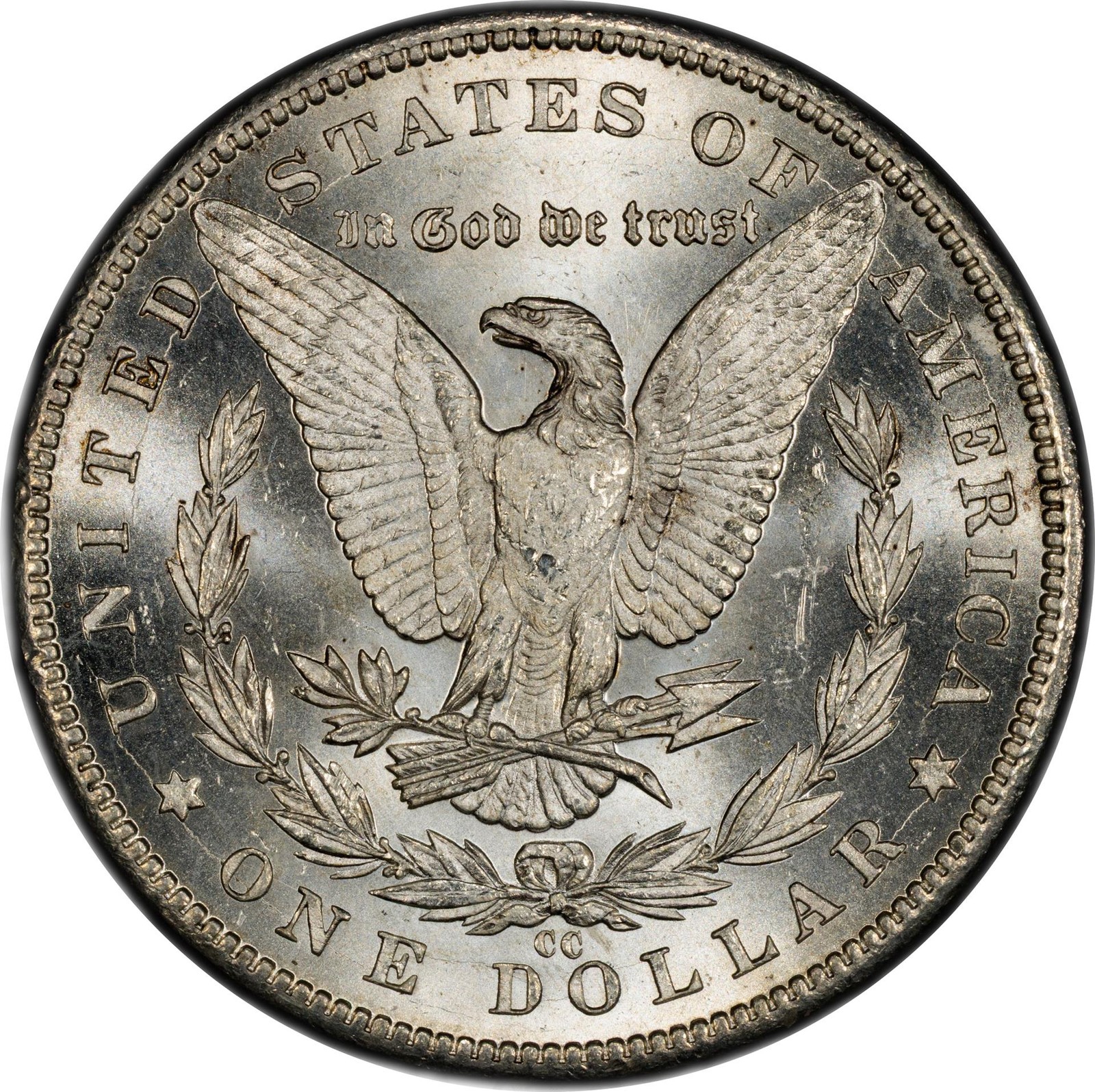
Morgan dollars are often collected as much for their mint identities as for their silver content, design, or date. The small letter on the reverse can point to a particular branch mint, a different regional economy, and a distinct collecting challenge. A Carson City dollar evokes the Old West; an New Orleans issue reflects the post-Civil War South; a San Francisco coin may connect to western commerce and large-scale bullion operations.
For Morgan dollar collectors, mintmarks are not merely abbreviations. They are part of the coin’s story—and, in some cases, a major factor in availability and value.
This guide covers the five mints that struck Morgan dollars: Philadelphia, Carson City, New Orleans, San Francisco, and Denver. It also explains where to find the mintmark and why authentication matters before paying a premium for a scarcer mint issue.
Where to Find a Morgan Dollar Mintmark
On a Morgan dollar, the mintmark appears on the reverse, below the wreath and above the letters “DO” in “DOLLAR.” Look in the open space between the bow at the bottom of the wreath and the denomination.
The possible mintmarks are:
- No mintmark: Philadelphia
- CC: Carson City, Nevada
- O: New Orleans, Louisiana
- S: San Francisco, California
- D: Denver, Colorado
Philadelphia Morgan dollars normally have no mintmark. This is an important point for beginners: an unmarked Morgan dollar is not necessarily damaged, incomplete, or unusual. For most of the series, no mintmark is exactly what a Philadelphia issue should have.
Use a magnifier and good side lighting when checking the reverse. Dirt, toning, wear, scratches, and weak striking can make a genuine mintmark difficult to read. Conversely, those same conditions can help conceal an added or altered mintmark.
A mintmark identifies where a coin was struck, not automatically how rare or valuable it is. Date, condition, die variety, originality, certification status, and current market demand all matter.
Philadelphia: The Unmarked Morgan Dollar
Philadelphia was the principal Mint and struck Morgan dollars in every year of the regular series: 1878 through 1904, plus 1921. Philadelphia issues normally carry no mintmark.
Because Philadelphia coins were produced across the full span of the series, they offer collectors a useful foundation for date sets. Many dates are readily encountered in circulated grades, while some are significantly more difficult in high Mint State preservation. A coin’s lack of a mintmark should therefore be treated as an identifying feature, not as proof of commonness.
Philadelphia Morgan dollars also include several important varieties, especially among the early 1878 issues. The first-year coins are known for reverse design differences involving the number and shape of the eagle’s tail feathers. These varieties are separate from mintmark collecting, but they demonstrate why reading the date and reverse details carefully is essential.
Philadelphia collecting checklist
- Confirm that the reverse has no mintmark in the normal mintmark position.
- Check the date; Philadelphia Morgan dollars were struck from 1878–1904 and again in 1921.
- For 1878 dollars, examine reverse details if variety collecting interests you.
- Do not assume an unmarked coin is common without checking the date and grade.
- Compare the coin against reliable photographs before buying an expensive example.
Carson City: The Famous CC Mintmark
Carson City Morgan dollars bear the CC mintmark and were struck in 1878–1885 and 1889–1893. The Carson City Mint was located in Nevada, near the region’s major silver-mining activity, giving these coins a powerful historical connection to the American West.
The “CC” is one of the most recognized mintmarks in U.S. numismatics. Many collectors pursue Carson City Morgan dollars as a distinct set, while others seek a single representative example because of the mint’s historical appeal. That popularity can create strong demand even for dates that are not necessarily the lowest-mintage coins in the wider Morgan dollar series.
Carson City dollars are often associated with Treasury storage and later government sales, which helped bring substantial numbers of certain dates into the collector market. Still, availability varies dramatically by date, condition, and whether a coin has attractive original surfaces. A coin can be available in lower circulated grades yet very scarce with strong luster and minimal marks.
When evaluating a CC Morgan dollar, examine the mintmark particularly closely. The premium attached to the letters “CC” makes these coins a target for counterfeiters and for altered pieces made by adding a mintmark to a Philadelphia dollar.
Carson City collecting checklist
- Look for a clearly defined CC below the wreath on the reverse.
- Verify the date falls within the Carson City production years: 1878–1885 or 1889–1893.
- Inspect the area around the mintmark for tooling marks, unnatural texture, or disturbed metal.
- Be cautious of unusually low prices for key or high-grade CC coins.
- Consider third-party authentication for coins sold at a meaningful premium.
New Orleans: The O Mintmark and a Long Southern Run
New Orleans Morgan dollars carry an O mintmark and were struck from 1879 through 1904. The New Orleans Mint had a long and complex history before, during, and after the Civil War, and its Morgan dollar production represents the branch mint’s role in the late nineteenth-century federal coinage system.
An “O” mintmark can be especially challenging to evaluate on worn coins because it is a single letter. It may appear weak from circulation, strike characteristics, or surface damage. A collector should distinguish a genuinely weak but original mintmark from one that has been altered, smoothed, or added.
New Orleans Morgan dollars are often collected by date and mintmark, and they provide a broad range of difficulty. Some dates are approachable in circulated grades, while others become substantially harder to locate in sharply struck, original Mint State condition. Strike quality is an especially useful consideration for many O-mint dollars: coins can show softness in central design areas even when they retain considerable luster.
Rather than judging an O-mint Morgan solely by the number on a price guide or an online asking price, compare like with like. A dealer’s retail asking price is not the same as an auction result, and neither automatically equals a coin’s estimated value. A coin’s grade, eye appeal, cleaning history, and authentication status can make a major difference.
New Orleans collecting checklist
- Confirm the presence of a single O in the normal reverse mintmark position.
- Check that the date is between 1879 and 1904.
- Evaluate strike quality separately from wear; a weakly struck coin is not always heavily circulated.
- Watch for cleaned surfaces, artificial shine, or damage around the mintmark.
- Compare certified examples of the same date and grade before making a major purchase.
San Francisco: The S Mintmark
San Francisco Morgan dollars bear the S mintmark and were struck from 1878 through 1904, plus 1921. Like Philadelphia, San Francisco participated in both the original Morgan dollar era and the final 1921 resumption of production.
The San Francisco Mint’s location made it an important western coinage facility, and its Morgan dollars are a central part of many date-and-mintmark collections. S-mint coins range from relatively available issues to challenging dates that can be scarce, particularly in higher grades or with strong original surfaces.
Collectors often pay close attention to luster, strike, and preservation when evaluating San Francisco dollars. However, no mintmark alone guarantees superior quality. Individual coins vary widely. A lustrous coin may still have distracting marks, an old cleaning, or altered color; a coin with modest luster may have more natural surfaces and stronger overall eye appeal.
The 1921-S Morgan dollar is also important because 1921 was the only year in which Denver struck Morgan dollars, making it a useful year for collectors comparing the final Philadelphia, San Francisco, and Denver issues.
San Francisco collecting checklist
- Look for an S beneath the wreath and above “DOLLAR.”
- Verify the date is 1878–1904 or 1921.
- Examine luster and surfaces under a single light source.
- Compare strike sharpness with other examples of the same issue.
- Avoid assuming every S-mint dollar is scarce or every bright coin is original.
Denver: The One-Year D Mintmark
Denver Morgan dollars carry a D mintmark and were struck only in 1921. This makes the 1921-D a distinctive issue: it is the sole Morgan dollar produced at the Denver Mint.
The 1921-D is frequently chosen as a representative Denver coin because there is no broader run of Denver Morgan dollars to complete. It is also a useful reminder that a one-year mintmark does not automatically make a coin rare. Survival numbers, condition, demand, and market activity all affect collectible value.
A 1921-D should show the same reverse mintmark placement as other Morgan dollars. Because the D mintmark commands attention from collectors building a five-mint type set, inspect it carefully for alteration. A coin that appears to have a D added after striking should not be valued as a genuine Denver issue.
Denver collecting checklist
- Confirm the date is 1921; no other Morgan dollar date should carry a Denver D mintmark.
- Verify that the D sits naturally in the standard reverse mintmark location.
- Inspect for added-metal seams, engraving, discoloration, or altered texture.
- Compare the mintmark’s shape and placement with trusted reference images.
- Seek expert review for a raw coin offered as a high-value 1921-D.
Protect Yourself From Added or Altered Mintmarks
Mintmark alterations are among the most important risks in Morgan dollar collecting. Since a genuine CC, O, S, or D can carry a different market premium than a Philadelphia coin of the same date and grade, dishonest sellers may attempt to alter the mintmark area.
Common warning signs include:
- A mintmark with a different color, texture, or reflectivity than the surrounding field
- Tool marks, pits, scratches, or raised metal around the letters
- A mintmark that looks too sharp on an otherwise worn coin
- Letter shapes that do not match known genuine examples
- A mintmark positioned too high, too low, tilted, or otherwise out of alignment
- An unusually cheap price for a coin represented as a scarce date or desirable mint
Counterfeit Morgan dollars are also a concern. A counterfeit may have a fabricated mintmark along with incorrect weight, dimensions, design details, edge reeds, or metal composition. A home scale and calipers can be useful preliminary tools, but they do not replace professional examination.
For expensive coins, consider buying examples authenticated and graded by a respected third-party service, or submit a raw coin to a qualified numismatist or authentication service. Certification is an opinion, not a guarantee of future value, but it can reduce uncertainty about authenticity and grade.
For more series background and collecting ideas, see [INTERNAL LINK NEEDED].
A Practical Five-Mint Morgan Dollar Goal
A compact way to learn the series is to assemble one representative Morgan dollar from each issuing mint:
- Philadelphia: no mintmark
- Carson City: CC
- New Orleans: O
- San Francisco: S
- Denver: D
This approach lets collectors compare the five mint identities without immediately committing to every date and mintmark combination. Choose coins within your budget, prioritize authenticity and problem-free surfaces, and keep notes on each purchase. Record the date, mintmark, grade, seller, price paid, and whether the coin is certified.
Remember that the silver value of a Morgan dollar is not the same as its collector value. Face value is one dollar. Melt value depends on the coin’s silver content and the current silver price. A dealer’s retail asking price is what the seller hopes to receive, while an auction result records a specific sale under particular conditions. An estimated value is an informed opinion and can change with market conditions.
Conclusion
Morgan dollar mintmarks turn a familiar silver dollar into a map of five American mints. Philadelphia coins normally have no mintmark; Carson City uses CC; New Orleans uses O; San Francisco uses S; and Denver’s D appears only on the 1921 issue. Learning that basic framework is the first step. The next is slowing down: verify the date, inspect the reverse, compare genuine examples, and seek professional authentication when the coin or premium warrants it.
Frequently Asked Questions
Where is the mintmark on a Morgan dollar?
The mintmark is on the reverse, below the wreath and above the “DO” in “DOLLAR.” Philadelphia Morgan dollars normally have no mintmark in that location.
Do all Morgan dollars have mintmarks?
No. Philadelphia Morgan dollars normally lack a mintmark. Coins struck at Carson City, New Orleans, San Francisco, and Denver carry CC, O, S, and D mintmarks, respectively.
Which Morgan dollar dates were struck at Carson City?
Carson City struck Morgan dollars from 1878 through 1885 and again from 1889 through 1893. These coins bear the CC mintmark.
Is a 1921-D Morgan dollar rare because Denver struck it for only one year?
The 1921-D is the only Denver Morgan dollar, which makes it important for mintmark sets. But one-year production alone does not determine rarity or value. Grade, survival, demand, authenticity, and overall condition must also be considered.
How can I tell whether a Morgan dollar mintmark has been added?
Look for disturbed metal, tool marks, mismatched color, unnatural letter shapes, or incorrect placement. Because altered mintmarks can be difficult to detect, consult a qualified numismatist or use reputable third-party authentication for coins carrying substantial premiums.